


Section 5
Breaking Down PFAS
The Latest PFAS Treatment and Remediation Technologies


Section 5
Breaking Down PFAS: The Latest PFAS Treatment and Remediation Technologies
Why PFAS Are So Hard to Remove
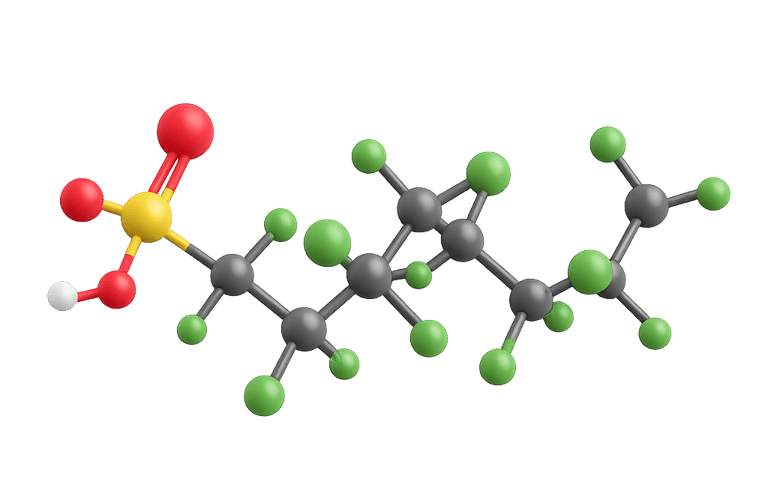
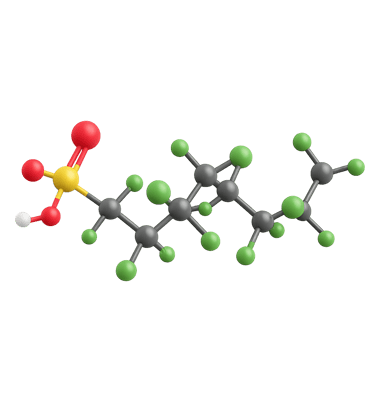
Per- and polyfluoroalkyl substances (PFAS) are called “forever chemicals” for a reason. Their carbon-fluorine bond — one of the strongest in chemistry — resists heat, light, and biological breakdown. That same property that makes them great for waterproof jackets and non-stick pans makes them incredibly persistent once they escape into soil and water.
As PFAS regulations tighten worldwide, industries and governments are searching for solutions that not only capture PFAS from contaminated media but also destroy them permanently. The science of PFAS remediation has rapidly evolved, moving beyond simple filtration to technologies that can break chemical bonds at the molecular level.
Step One: Capturing PFAS from Water
Most cleanup projects start with removal, separating PFAS from water or soil before destruction. Several proven technologies dominate this first phase.
1. Granular Activated Carbon (GAC)
GAC remains one of the most widely used PFAS treatment methods, particularly for drinking-water applications.
How it works: PFAS molecules adhere to the porous carbon surface through adsorption.
Best for: Long-chain PFAS such as PFOS and PFOA.
Limitations: Short-chain PFAS break through quickly, and spent carbon can be thermally regenerated if inside LPCL (Lower persistent organic pollutant concentration limits) or destroyed.
2. Ion-Exchange Resins (IX)
Synthetic resins exchange ions with PFAS molecules, offering higher efficiency than GAC in many cases.
Advantages: Effective for both long- and short-chain PFAS, faster kinetics, smaller footprint.
Challenges: Disposal or regeneration of used resin remains costly, and resins may foul in complex water matrices.
3. Ion-Exchange Resins (IX) with regeneration
Synthetic resins exchange ions with PFAS molecules, offering higher efficiency than GAC in many cases.
Advantages: Effective for both long- and short-chain PFAS, faster kinetics, smaller footprint. Regeneration allows for reuse of the media, dramatically improving ESG metrics.
Challenges: Despite greater capacity and breadth of operation compared to GAC IX is still limited by LPCL (Lower persistent organic pollutant concentration limits), and resins may foul in complex water matrices.
4. High-Pressure Membrane Filtration
Processes such as nanofiltration (NF) and reverse osmosis (RO) physically separate PFAS from water using semi-permeable membranes.
Performance: Removes > 90 % of most PFAS compounds.
Downside: Generates a concentrated PFAS waste stream that still requires destruction, limited by salt concentration in the influent and incompatible materials preventing use for some streams.
5. PFAS specific capture media with regeneration
Synthetic resins exchange ions with PFAS molecules, offering higher efficiency than GAC in many cases.
Advantages: Effective for both long- and short-chain PFAS, faster kinetics, smaller footprint. Regeneration allows for reuse of the media, dramatically improving ESG metrics. PFAS specific so can operating in the most challenging matrix without fouling- such as landfill leachate
Challenges: Despite greater capacity and breadth of operation these materials are still limited by LPCL (Lower persistent organic pollutant concentration limits), and the materials use fluorinated compounds to achieve selectivity functionality.
Step Two: Destroying PFAS for Good
Once captured, PFAS-laden media — like spent carbon, resins, or RO brine — must be treated to prevent re-release. Traditional incineration has been controversial due to incomplete combustion and potential air emissions, prompting investment in cleaner destruction methods.
1. Supercritical Water Oxidation (SCWO)
By exposing waste to high temperature and pressure in water above its critical point, SCWO converts PFAS into harmless compounds such as carbon dioxide, water, and fluoride ions.
Benefits: Near-complete PFAS destruction with minimal by-products.
Drawbacks: High capital and operating costs; complex maintenance.
2. Plasma Treatment
Non-thermal plasma uses energetic electrons to break PFAS bonds in liquid waste.
Advantages: No added chemicals, works at atmospheric pressure, rapid reaction times.
Status: Emerging at pilot and field-scale with encouraging destruction efficiencies > 99 %.
3. Electrochemical Oxidation (EO) and Advanced Electrochemical Oxidation process (AEOP)
Electric current applied through specialized anodes oxidizes PFAS into fluoride and carbon dioxide via production of OH radicals. Can be used as a pretreatment for wastestreams to improve and enhance capture operating lifetimes
Pros: Compact system, compatible with on-site treatment, scalable for industrial wastewater, highly effective in streams with high PFAS content, can oxidise other control or unwanted organics.
Cons: Can produce unwanted by products, far more efficient than high temperature incineration (HTI).
4. Photocatalysis and Ultraviolet ( UV ) Activated Persulfate
These chemical-oxidation techniques rely on radical formation to attack PFAS molecules.
Applications: Useful for low-concentration PFAS in groundwater or leachate.
Limitation: Still under development for full-scale deployment, significant scaling issues.
5. High Temperature incineration (HTI)
Incinerators are run for short periods at 1100C to achieve full mineralisation of PFAS molecules.
Applications: Useful for solids containing PFAS or very high content streams
Drawbacks: High capital and operating costs; complex maintenance, facilities vary - incomplete combustion and hazardous byproducts, impact on air quality
Innovative Hybrid and Combined Systems
In 2025, remediation specialists increasingly deploy integrated systems that combine capture and destruction in one continuous process. Examples include:
GAC + Plasma: Carbon captures PFAS, then plasma regenerates and destroys it in situ.
RO + AEOP: Membranes concentrate PFAS for efficient downstream destruction.
Ion-Exchange + AEOP: Resins are regenerated and remnants mineralized under controlled conditions.
AEOP + Ion-Exchange + AEOP : Influent streams are conditioned to reduce LPCL flagged low affinity species and other contaminants before the resin bed, enhancing bed lifetimes combined with subsequent regeneration, the remnants mineralized under controlled conditions.
Foam Fractionation + PFAS specific capture media + AEOP : Foam fractionation is a low costs high impact treatment for many species concentration the waste by many thousands of times subsequently the stream is passed into a highly selective bed to remove only the PFAS, when at capacity the bed is regenerated and concentrated remnants destroyed.
These closed-loop approaches reduce secondary waste and overall environmental footprint, supporting circular-economy goals.
Complex matrices where PFAS can be found demands the use of treatment trains and a PFAS ‘toolbox’ approach There is no ‘one size fits all’ methodology; consultants, contractors and remediators must be versatile in their approach.
PFAS in Soil and Sediment: Beyond Water Treatment
PFAS often bind strongly to soils, especially those rich in organic matter. Options for contaminated land include:
Excavation and Off-Site Disposal – effective but expensive and increasingly restricted.
Soil Washing – separates fine PFAS-rich particles from clean fractions for targeted treatment.
Thermal Desorption – heats soil to volatilize PFAS; gases are captured and oxidized.
Stabilization and Solidification – immobilizes PFAS to prevent leaching where destruction is impractical.
Emerging in-situ technologies, such as colloidal activated carbon barriers and foam fractionation, aim to contain or remove PFAS without large-scale excavation.
Measuring Success: Treatment Validation and Monitoring
Even the most advanced system must demonstrate verified performance. Regulators typically require:
Influent and effluent sampling before, during, and after treatment.
Destruction efficiency documentation (usually > 99 %).
Mass-balance analysis to ensure PFAS are not merely transformed into other harmful intermediates.
Long-term monitoring of groundwater and surface-water receptors to confirm stability.
Consistent data reporting and transparent validation build confidence among regulators, communities, and investors.
Choosing the Right PFAS Remediation Strategy
Selecting a treatment method depends on site-specific conditions:
Type of PFAS present (chain length, concentration, precursors)
Environmental medium (water, soil, sludge, air)
Regulatory targets and discharge limits
Energy availability and cost constraints
Desired end-use of treated water or land
A successful remediation program balances technical effectiveness, sustainability, and economic feasibility, often using a staged approach — removal first, destruction second, and prevention always.
The Road Ahead: Toward Sustainable PFAS Elimination
PFAS cleanup is no longer a distant goal; it’s happening now. Research is accelerating around energy-efficient plasma systems, biological degradation pathways, and AI-driven process optimization. Collaborative efforts between academia, technology developers, and industries are moving these innovations from the lab to full-scale deployment.
The endgame is clear: to make PFAS destruction complete, scalable, and sustainable. As nations set stricter limits and industries commit to transparency, the combination of science, regulation, and engineering innovation offers genuine hope for a future free from forever chemicals.
Updated: 1 December 2025


Environmental Approach
Global Research


Section 1
PFAS
The Global Chemical Challenge Threatening Health and the Environment
Updated: 5th Dec 2025


Section 2
Global PFAS Regulations
How Countries Are Responding to the Forever Chemicals Crisis
Updated: 5th Dec 2025


Section 3
How Businesses Can Identify and Manage PFAS Risk
From Exposure Pathways to Sampling Best Practices
Updated: 1st Dec 2025
Section 4
The Science of Detecting PFAS
How Sampling and Analysis Shape the Fight Against Forever Chemicals
Updated: 8th Dec 2025


Section 5
Breaking Down Forever Chemicals
The Latest PFAS Treatment and Remediation Technologies
Updated: 1st Dec 2025






Section 6
The Future of PFAS Management
From Corporate Responsibility to Global Elimination
Updated: 1st Dec 2025
Section 8
Leading Through Change
How Companies Can Future-Proof Against PFAS Risks
Updated: 1st Dec 2025


Section 9
The Next Phase of the PFAS Response
Turning Knowledge Into Action
Updated: 1st Dec 2025 Find Out More >


Take Action
Address
London, United Kingdom
Contact


Copyright © 2026 2Encapsulate Limited. All rights reserved.
Useful Links
Social Media
Website built by ricardon.co.uk
Company number: 14883182