
Cancer Concerns among Firefighters
Firefighters Renew Calls for Stronger PFAS Controls Amid Cancer Concerns
ITV
6/1/20263 min read

Overview
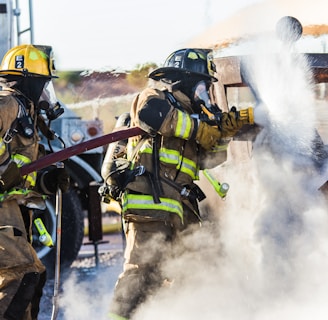
Firefighter representatives and health advocates are calling for stronger PFAS regulations following growing concerns about elevated cancer risks among firefighters.
The concern centres on the historical use of PFAS-containing aqueous film-forming foams (AFFF), which were widely used to suppress fuel fires at:
Airports
Military bases
Industrial facilities
Fire training grounds
These foams have long been recognised as one of the largest sources of PFAS contamination worldwide.
The story argues that firefighters have effectively been on the frontline of PFAS exposure for decades.
Why firefighters are concerned
PFAS exposure among firefighters can occur through multiple pathways.
These include:
Firefighting foams
Historically, many firefighting foams contained PFAS compounds because they were highly effective at suppressing fuel-based fires.
Repeated training exercises and operational use created significant exposure opportunities.
Protective equipment
Research internationally has identified PFAS compounds in some firefighting gear and protective clothing.
Contaminated environments
Firefighters frequently operate in environments where hazardous substances are released during fires and industrial incidents.
This combination has raised concerns that firefighters may face higher cumulative exposure than the general population.
The cancer debate
A major theme of the story is the growing concern regarding links between PFAS and cancer.
Researchers have associated certain PFAS compounds with:
Kidney cancer
Testicular cancer
Liver effects
Immune-system impacts
Hormonal disruption
The article notes that scientific research continues to evolve and that PFAS exposure is only one of several occupational hazards faced by firefighters.
However, firefighter groups argue that the evidence is now strong enough to justify precautionary action.
Firefighting foams under scrutiny
The story highlights firefighting foams as a major regulatory target.
PFAS-containing foams were developed because they could rapidly suppress flammable-liquid fires.
Unfortunately, they also became one of the most important sources of environmental contamination.
Contamination has been documented around:
Airports
RAF bases
Industrial facilities
Fire training sites
Many of these locations remain the focus of environmental investigations today.
Connection to UK regulation
The article notes that the UK is already considering restrictions on PFAS-containing firefighting foams.
The Health and Safety Executive has been reviewing proposals that could significantly restrict or phase out some PFAS foam applications.
This is one of the few areas where concrete PFAS regulatory action is already progressing.
Because suitable alternatives are increasingly available, firefighting foams are often viewed as a practical starting point for broader PFAS regulation.
Environmental consequences
The story emphasises that firefighter concerns extend beyond occupational health.
Many firefighter organisations now argue that reducing PFAS use would also reduce environmental contamination.
Historically, foam use has contaminated:
Soil
Groundwater
Rivers
Lakes
Coastal environments
Because PFAS persist for decades, contamination from historical foam use continues to create remediation challenges.
This has become a significant financial issue for governments, airports and site owners.
Growing political pressure
The firefighter campaign is occurring alongside broader political developments.
Recent pressure has come from:
Environmental Audit Committee recommendations.
NGO campaigns.
Academic research.
Drinking-water contamination concerns.
Environmental monitoring studies.
The firefighter perspective adds a human-health dimension that often receives significant public and political attention.
What firefighter organisations are asking for
Key requests include:
Stronger PFAS restrictions
Accelerated regulation of PFAS-containing products and materials.
Improved health monitoring
More systematic monitoring of firefighter health outcomes.
Better exposure assessments
Greater understanding of occupational PFAS exposure pathways.
Safer alternatives
Faster adoption of non-PFAS firefighting technologies where appropriate.
Long-term research
Further investigation into cancer risks and cumulative exposure.
Why this matters for PFAS policy
This story is important because it shifts the discussion from environmental contamination to human consequences.
For years, PFAS debates focused largely on:
Water quality
Pollution
Environmental monitoring
Firefighter organisations are reframing the issue around:
Occupational safety
Cancer prevention
Worker protection
Public health
Historically, environmental regulation often accelerates when occupational-health concerns become politically visible.
Potential future developments
The story suggests several likely developments over the next few years:
Short-term
Continued scrutiny of firefighting foams.
Expanded occupational-health studies.
Increased media attention.
Medium-term
Additional restrictions on PFAS-containing foams.
Enhanced monitoring requirements.
New workplace guidance.
Long-term
Phase-out of most non-essential PFAS foam applications.
Remediation of contaminated fire-training sites.
Greater recognition of firefighter exposure risks.
Key Takeaway
The central message of this story is that firefighters are emerging as one of the most influential voices in the UK's PFAS debate. Their concerns link environmental contamination directly to occupational health and cancer risk, increasing political pressure for stronger regulation. While research into long-term health impacts continues, firefighter groups argue that enough evidence already exists to justify precautionary action, particularly regarding PFAS-containing firefighting foams. The issue is significant because it combines environmental protection, public health, workplace safety, and regulatory reform into a single policy challenge.
Address
London, United Kingdom
Contact


Copyright © 2026 2Encapsulate Limited. All rights reserved.
Useful Links
Social Media
Website built by ricardon.co.uk
Company number: 14883182